
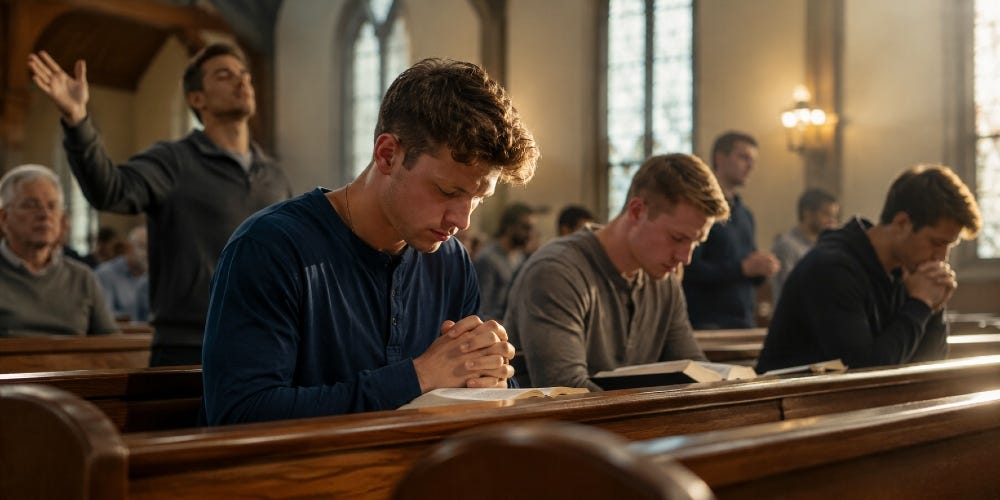
Across pews once dominated by gray heads and empty seats, a new presence is emerging: young men in their twenties, showing up with purpose. This is no fleeting trend or social media mirage. Data from Gallup and Barna confirm what observant Christians have sensed in their congregations — a resurgence of faith among males who, just years ago, seemed lost to secular distractions and cultural confusion.
This shift matters profoundly. For decades, the left’s relentless push toward relativism, identity politics, and self-worship has hollowed out institutions, families, and individual lives. Young men, bearing the brunt of a society that demonized masculinity while celebrating chaos, are discovering what their fathers and grandfathers often took for granted: true strength flows from surrender to a higher calling.
Gallup’s latest findings reveal that 42 percent of young men now consider religion “very important” in their lives — a 14-point jump since 2023 and the highest level in a quarter century. Barna Group reports Gen Z churchgoers attending more frequently than any other generation, marking what they call a “historic reversal.”
Young men are not just warming pews; they are leading the return.
Sociologists scratch their heads at this development, but the reasons are clear to anyone willing to look beyond progressive talking points. The past decade exposed the emptiness of self-expression without boundaries, of activism untethered from truth, and of technology promising connection while delivering isolation. Like rebels of previous eras who chased liberation only to find chains, today’s young men have encountered the void at the heart of modern secularism.
Dr. William J. Bennett, reflecting on his own journey from a secular college detour back to Catholic faith, captures the dynamic well. The “chains” of religion, he notes, prove liberating. Faith communities demand better — purpose forged in struggle, sacrifice, and service to something eternal.
This resonates deeply with young men wired for adventure, responsibility, and meaning beyond fleeting pleasures or online outrage.
The Cultural and Political Stakes
A generation recovering the transcendent will not bow easily to the state as ultimate authority. History bears this out. America’s founding drew strength from biblical principles and men of faith who understood liberty as a divine trust, not a government grant.
When young men embrace this inheritance, they become bulwarks against family erosion, educational indoctrination, and the erosion of religious liberty.
Evidence already points to ripple effects. Post-assassination of Charlie Kirk last September, Bible sales surged 36 percent in a month, reaching 21-year highs in 2025. Young people confronted with mortality and meaningless rage turned to the only source that has ever answered such questions adequately. This is not coincidence; it is providence at work amid gathering storms — from gender ideology’s confusion to democratic socialism’s false promises and AI’s godless horizons.
Strong male participation in the church strengthens the entire body. When men lead spiritually in homes and congregations, marriages stabilize, children flourish, and communities gain moral backbone. Research consistently shows religiously engaged men exhibit lower rates of destructive behaviors, higher commitment to family, and greater civic involvement. In an age of fatherlessness and aimlessness, this return signals hope for reversing national decline.
Critics on the left dismiss or downplay these trends, perhaps sensing the threat to their narrative of inevitable secular progress. Yet the data keeps mounting, even as some attempt to attribute shifts solely to women’s declining participation rather than men’s revival. The reality in the pews tells otherwise: young men are showing up, engaging, and seeking truth amid the lies.
A Call to Greater Faithfulness
This resurgence invites the broader church to respond with vigor — not watered-down relevance, but uncompromised proclamation of the Gospel that has always transformed lives and societies. Pastors and leaders must disciple these young men into mature believers ready to build families, defend truth, and engage culture without apology.
The pattern echoes biblical precedent. When darkness deepens, light breaks through with greater brilliance. As the prophet declared in days of national crisis, “If my people, which are called by my name, shall humble themselves, and pray, and seek my face, and turn from their wicked ways; then will I hear from heaven, and will forgive their sin, and will heal their land.” (2 Chronicles 7:14)
Young men answering this call today stand poised not merely to match the faithfulness of prior generations but to surpass it. Their hunger for purpose, forged in cultural fire, positions them as instruments for renewal. America does not need more programs or policies divorced from virtue; it needs hearts reclaimed by the God who designed men for leadership, protection, and sacrificial love.
The future remains unwritten, but the signs in the sanctuary point toward restoration. As these young men take their place, the reshaping of families, culture, and the nation itself may well follow. The question is whether the church and country will rise to meet this moment with the same resolve they are rediscovering.
This is great news! I pray the Gen Z men continue this movement!!
Sorry to be a buzzkill. Men, all men, are in crisis right now as women, bureacracies and oligopolies have marinalized them and taken away their purpose. SSRIs, suicides and more accompany this turn back to faith.
While faith and prayer may may save many, the societal crisis worsens and men continue to sink into hopelessness. The outlook is dire.