

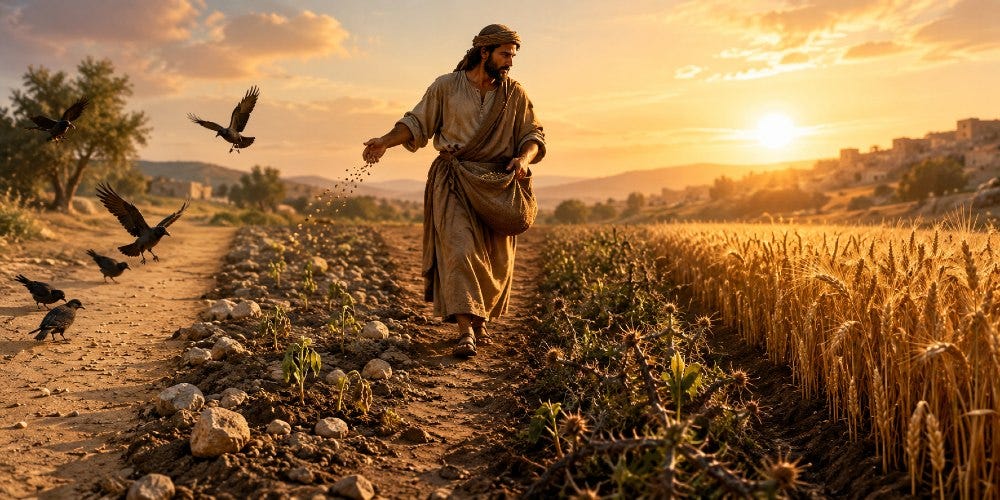
The Parable of the Sower is not primarily about the seed. The seed is the Word of God, perfect and incorruptible. It requires no improvement, no editing, and no human intervention to become effective. The variable that decides fruitfulness is the soil — the condition of the human heart and spirit that receives it.
Jesus Himself explained this truth plainly in Matthew 13:18-23 (KJV): “Hear ye therefore the parable of the sower. When any one heareth the word of the kingdom, and understandeth it not, then cometh the wicked one, and catcheth away that which was sown in his heart. This is he which received seed by the way side. But he that received the seed into stony places, the same is he that heareth the word, and anon with joy receiveth it; Yet hath he not root in himself, but dureth for a while: for when tribulation or persecution ariseth because of the word, by and by he is offended. He also that received seed among the thorns is he that heareth the word; and the care of this world, and the deceitfulness of riches, choke the word, and he becometh unfruitful. But he that received seed into the good ground is he that heareth the word, and understandeth it; which also beareth fruit, and bringeth forth, some an hundredfold, some sixty, some thirty.”
This parable stands as one of the foundational teachings of Christ because it forces every believer to examine themselves rather than blaming the unchanging truth of Scripture. The seed never fails. The sower may scatter it faithfully. But the soil — our cultivated or neglected inner man — determines whether the kingdom advances through our lives or withers in shallow victory.
The way side represents the hardened heart. These are individuals who hear the Word but allow it no entrance. The wicked one immediately snatches it away because the soil has been packed down by repeated rejection, cynicism, or worldly traffic. No cultivation has occurred. No plowing of repentance has broken up the fallow ground. Jeremiah 4:3 (KJV) commands, “Break up your fallow ground, and sow not among thorns.” A hardened heart cannot receive the engrafted Word that is able to save souls (James 1:21).
The stony places speak of shallow emotional reception. These hearts receive the Word with joy but lack depth. There has been no deep tilling, no removal of the rocky obstacles of unconfessed sin, pride, or unresolved offenses. When persecution arises — and it always does for those who truly live by the Word — they wither. The root system is underdeveloped because the hard stones of self-will were never dug out.
The thorny ground illustrates the divided heart. The cares of this world, the deceitfulness of riches, and the lusts of other things choke the Word. This soil received seed but never underwent the necessary weeding. The believer may attend church, listen to sermons, and even feel conviction, yet the competing priorities of career ambition, entertainment, comfort, and materialism prevent any lasting fruit. The seed is perfect, but the soil is cluttered.
Only the good ground produces a harvest — thirty, sixty, or a hundredfold. This is the heart that has been diligently cultivated. It has been broken by the plow of conviction, cleared of stones through repentance, and kept free of thorns by daily surrender. This heart hears, understands, and retains the Word, allowing it to bring forth fruit with patience (Luke 8:15).
The theological implication is sobering: God holds us accountable for the condition of our soil. The responsibility is not on the sower or the seed but on the receiver. Hosea 10:12 (KJV) declares, “Sow to yourselves in righteousness, reap in mercy; break up your fallow ground: for it is time to seek the LORD, till he come and rain righteousness upon you.” Cultivation is not optional for the serious disciple. It is the difference between barren profession and abundant kingdom fruitfulness.
Throughout Scripture, the heart is the central battleground. Proverbs 4:23 (KJV) warns, “Keep thy heart with all diligence; for out of it are the issues of life.” David cried out in Psalm 51:10 (KJV), “Create in me a clean heart, O God; and renew a right spirit within me.”
The cultivation of soil requires humility, honesty before God, regular confession, meditation on Scripture, prayer, and obedience. Without these practices, even the most powerful preaching becomes like seed scattered on concrete.
This parable destroys the modern myth of easy believism. Receiving the Word is not a one-time emotional experience but an ongoing stewardship of the heart. The good soil is not naturally good — it becomes good through labor under the hand of the Holy Spirit. The farmer does not simply throw seed hoping for the best. He prepares the ground first.
As Christians in these last days, we must ask the penetrating question: What is the current condition of my heart’s soil? Is it hardened by bitterness or repeated compromise? Is it shallow because I have avoided the deeper dealings of God? Is it thorny because I have allowed the cares of this life to take precedence over the kingdom? Or is it good ground, carefully tended, ready to receive the incorruptible seed and multiply it for God’s glory?
The seed remains perfect. The question is whether our hearts are prepared to receive it.
Thank you JD for this article. I am reminded to work on my heart so the Word may flourish my soul.
There is a great deal of truth presented here, which is vital for our place and time like never before. The bad thing, the sad thing, the maddening thing, the frustrating thing is that the reader sees who wrote it, and either laughs or cries. The moment I saw J.D. Rucker, the argument was watered down, and the claims weakened to the point of absurdity. J.D. claims to be a Christian conservative journalist, but I have never seen a shred of evidence for any one of those things. His penchant for filthy language ("fuck", in all its iterations, is by FAR his favorite word), his absoliute obsession with violence porn, the number of extremely disturbing sexual posts he recounts in loving detail, his vile and demonic Jew-hatred, and the sickening names he invents for anyone who dares to disagree with him, completely ruined this otherwise excellent piece. Had anyone else on earth written this, I would have agreed with every last word.