

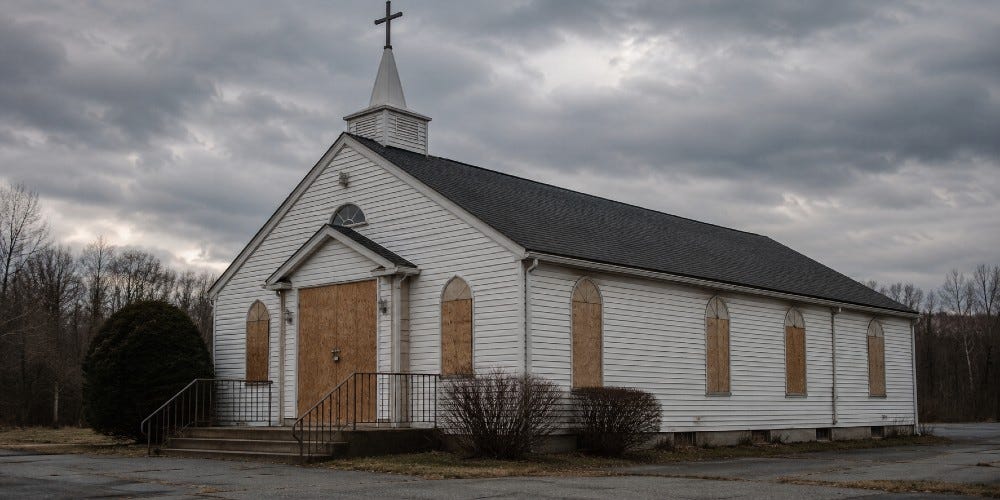
The data is unambiguous and alarming. Seminary enrollments are plummeting, churches are closing by the thousands, and a leadership vacuum is spreading across the American landscape. What Axios describes as a “collapsing pastor pipeline” is not merely a staffing shortage—it is a symptom of a nation drifting from its Christian foundations. As fewer men answer the call to ministry, communities lose more than sermons and sacraments; they lose the moral and civic backbone that has sustained ordered liberty for generations.
This decline accelerates even as cultural elites celebrate the rise of the religiously unaffiliated. The very institutions that formed virtue, aided the poor, and anchored families now struggle to find shepherds. The question confronting faithful Christians is whether this is mere demographic happenstance or the predictable fruit of a society that has traded biblical authority for therapeutic self-worship.
According to the Association of Theological Schools, Master of Divinity enrollment at accredited institutions dropped 14 percent between 2020 and 2024. Catholic seminary numbers fell significantly in the most recent academic year. Black Protestant enrollment has plunged 31 percent since 2000. These figures arrive alongside reports that more than 40 percent of clergy have seriously considered quitting since the pandemic, while 15,000 churches closed last year alone.
The human cost extends beyond statistics. Rural towns lose not only Sunday services but food banks, disaster response, and informal elder care. Black churches, long pillars of community resilience in underserved areas, face similar pressures. Catholic parishes in urban and minority neighborhoods are consolidating or shuttering. When the local pastor departs without replacement, the social fabric frays in ways government programs cannot mend.
Liberal Protestant denominations, having embraced cultural accommodation for decades, suffer the steepest declines. Their seminaries hemorrhage students while their pews empty. This should surprise no one. When churches prioritize political fashions over transcendent truth, young men of conviction look elsewhere. Why devote one’s life to an institution that seems embarrassed by its own doctrines?
Even in more conservative circles, challenges abound. Pastoral work has grown riskier in a cancel-prone culture. Lower compensation, family strain, and the exhaustion of managing shrinking congregations deter many. Political polarization turns sanctuaries into battlegrounds rather than houses of prayer. The result is a profession that once attracted the best and brightest now struggles for recruits.
Catholic dioceses import priests from Africa and Asia to fill gaps—a striking irony for a church that once sent missionaries outward. Pentecostals report some growth, yet even there the leadership pipeline shows strain. The broader trend is clear: America is reaping what it has sown through generations of secular indoctrination in schools, entertainment, and elite institutions.
Faithful observers have warned of this for years. The same forces that weakened family formation and birth rates now starve the church of future leaders. A civilization that mocks chastity, elevates autonomy above duty, and treats Christianity as optional cannot expect its pulpits to overflow with zealous young men.
Yet this moment also presents opportunity for renewal. Vibrant, unapologetic congregations that preach the whole counsel of God continue to draw committed believers. The solution lies not in marketing strategies or diluted doctrine but in returning to the source. As Jesus Himself declared amid a lost and scattered people, “The harvest truly is plenteous, but the labourers are few; Pray ye therefore the Lord of the harvest, that he will send forth labourers into his harvest.”
Christians must pray fervently for vocations, support seminaries that remain faithful, and raise sons who view ministry as the highest calling. Parents and churches alike should cultivate a culture that honors sacrifice over comfort. The empty pulpits of today demand not despair but determined faithfulness.
America’s future depends on whether a remnant will answer the call before the light of the Gospel dims further in the land once known as a shining city on a hill.
My parish baptized double the numbers of previous years. We rise from the remnants. Nothing will stop His Holy Church.
False leaders like Franklin Graham who cheers Trump and Israel wars of aggression make it clear that Christians are lead by pure EVIL. The US and Israel slaughter children in God's name. Trump pretends he is god, and post images of himself as a GOD. Trump has made proclamations to annihilate an entire civilization on Easter Morning. Trump would not put his hand on the Bible when sworn in.